


Calcifediol | Vitamin D3 2000 IU Tablets
Calcifediol | Vitamin D3 2000 IU Tablets
Couldn't load pickup availability
Share
4.75 / 5.0
(213) 213 total reviews
Key Benefits
Key Benefits
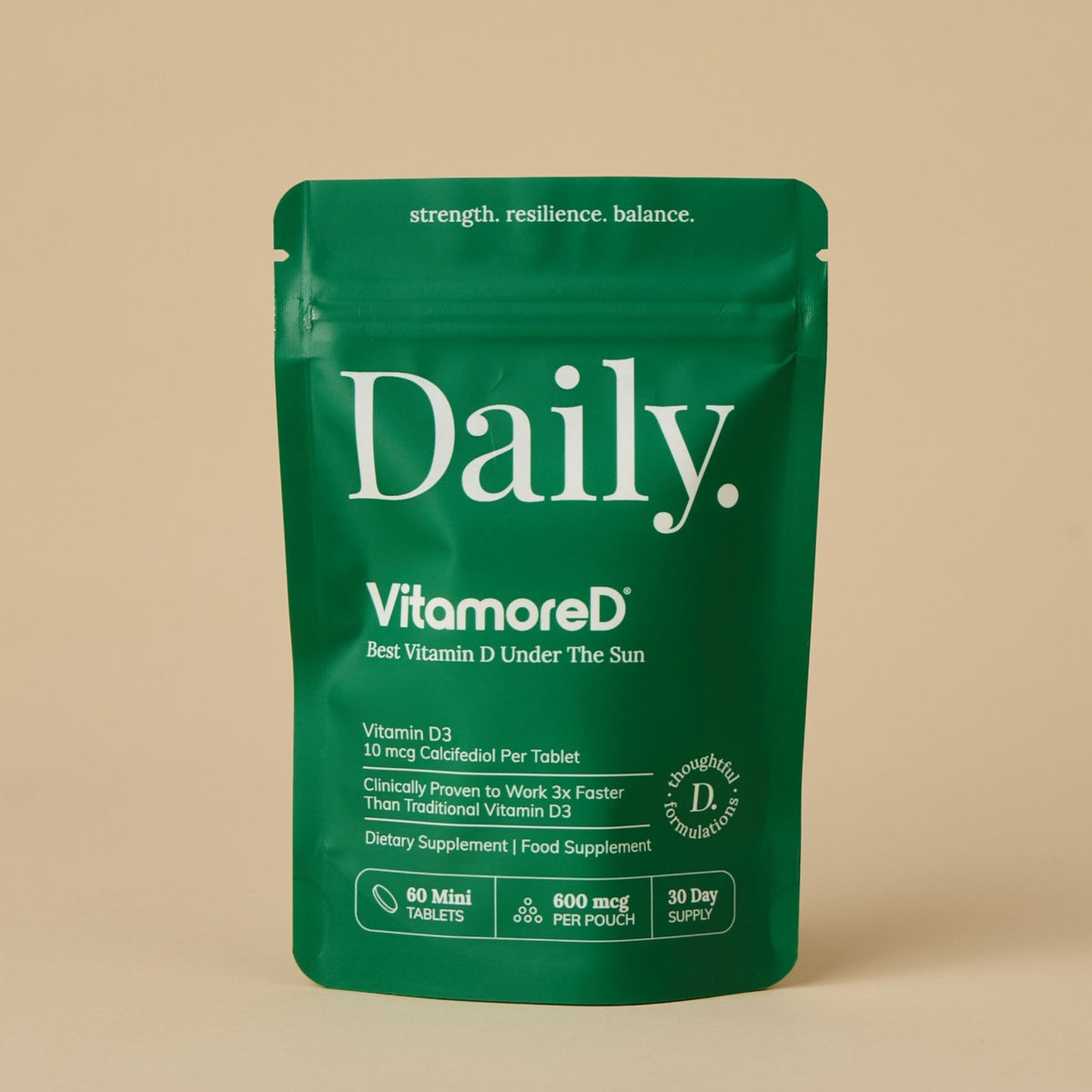
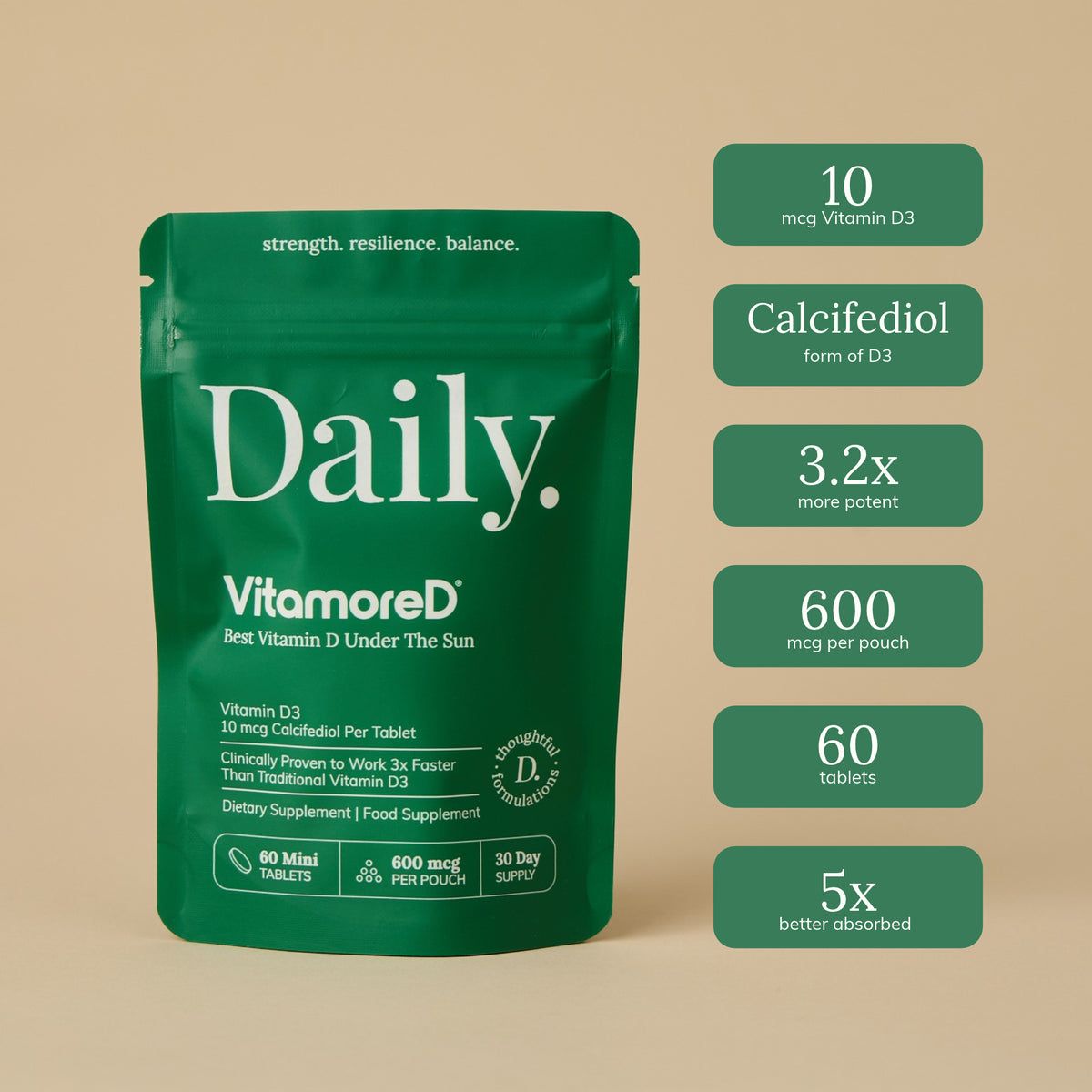
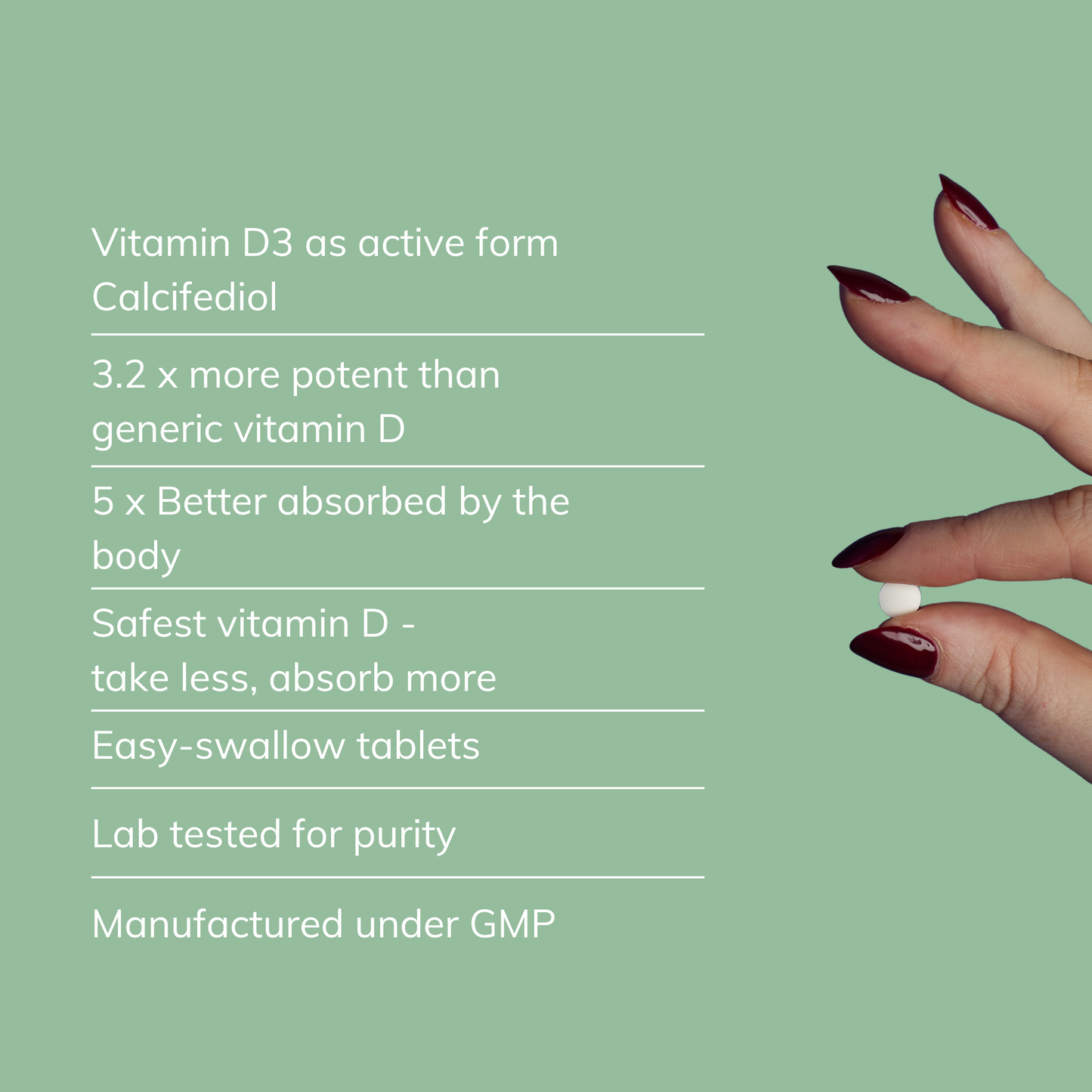
VitamoreD delivers Calcifediol (25-hydroxyvitamin D3), the form your blood test measures. One easy-to-swallow tablet with a 93% absorption rate.
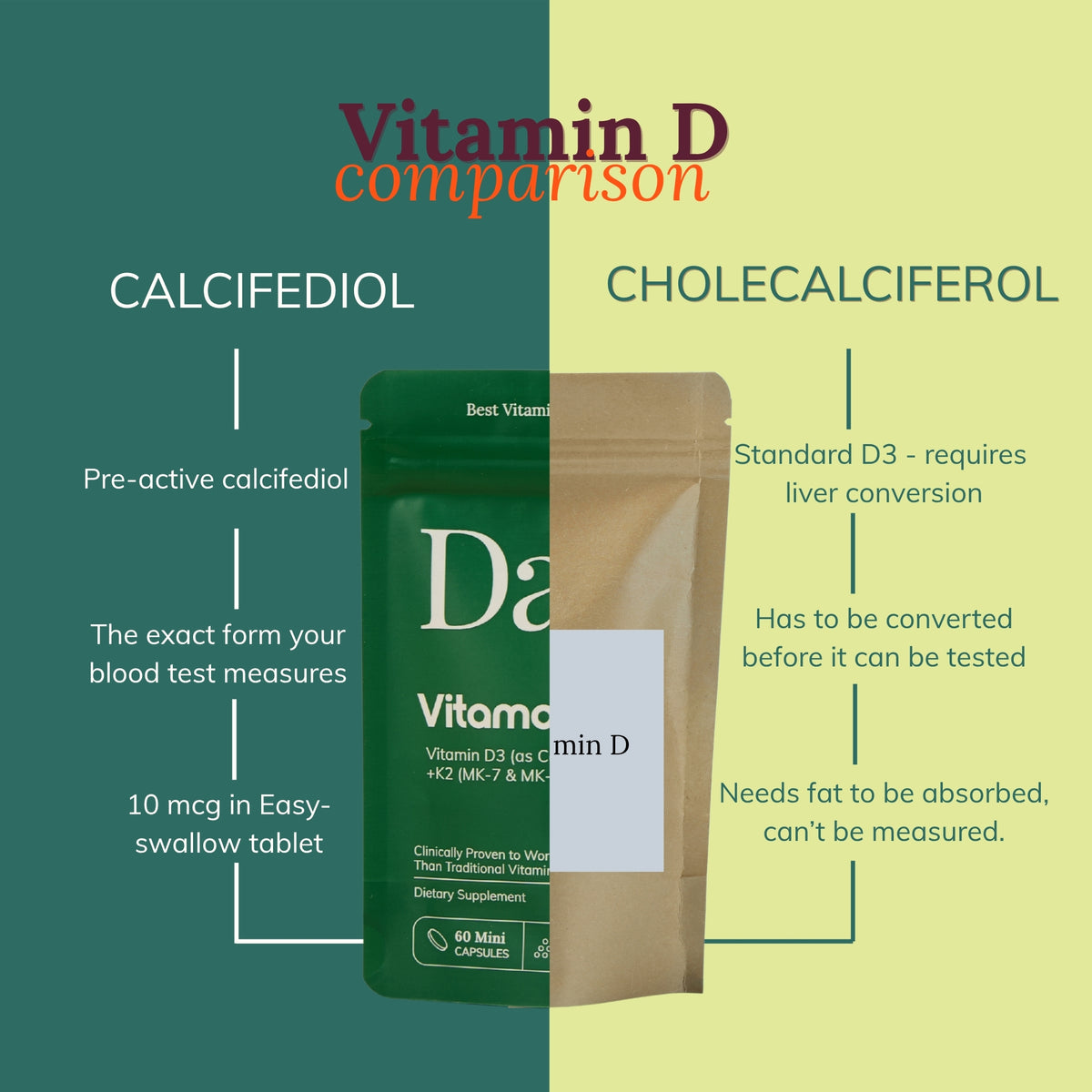
Traditional Vitamin D supplements are focused on cholecalciferol, which requires conversion in your liver to become Calcifediol. VitamoreD contains Calcifediol, also known as 25(OH)D or 25-hydroxyvitamin D. The form that circulates in your blood, the form that blood tests measure. Same benefits as traditional vitamin D3 but faster-acting and with more predictable and measurable results.
- Increase vitamin D levels in days, not weeks: Calcifediol skips the liver conversion (Calcifediol doesn't require hepatic 25-hydroxylation). Vitamin D 25(OH)D levels rise faster, which is what your blood test measures.
- Immune Function: Vitamin D contributes to the normal function of the immune system. Your immune cells carry vitamin D receptors (VDR) and depend on circulating Calcifediol to switch on that vitamin D response.
- Muscle Function: Vitamin D contributes to normal muscle function. Vitamin D receptors (VDR) sit in muscle fibres and their density falls with age.
- Calcium and Phosphorus: Vitamin D contributes to absorption of calcium and phosphorus. We need calcium and phosphorus because they combine to build strong bones and teeth. Calcium drives muscle movement, nerve signals, and heart function, and phosphorus powers cellular energy (ATP) and supports DNA. Absorbing them together is important because they balance each other in the blood and rely on adequate vitamin D levels for absorption and uptake.
For raising your blood vitamin D level, randomised trials show that 1 microgram of calcifediol vs 1 microgram of cholecalciferol: calcifediol is more potent, works faster and raises vitamin D levels more predictably. This is because, when supplemented, calcifediol, unlike cholecalciferol, is not pulled into the adipose (fat) tissue. Cholecalciferol is lipophilic, so taking high doses doesn't guarantee conversion, as it can be pulled into adipose tissue and stored; therefore, there is potential to overcompensate and overcorrect. Whereas calcifediol is more hydrophilic, vitamin D levels increase more linearly, microgram to microgram. So why wouldn't you supplement with calcifediol, the form we measure in tests, over traditional cholecalciferol D3?
How It Works
How It Works
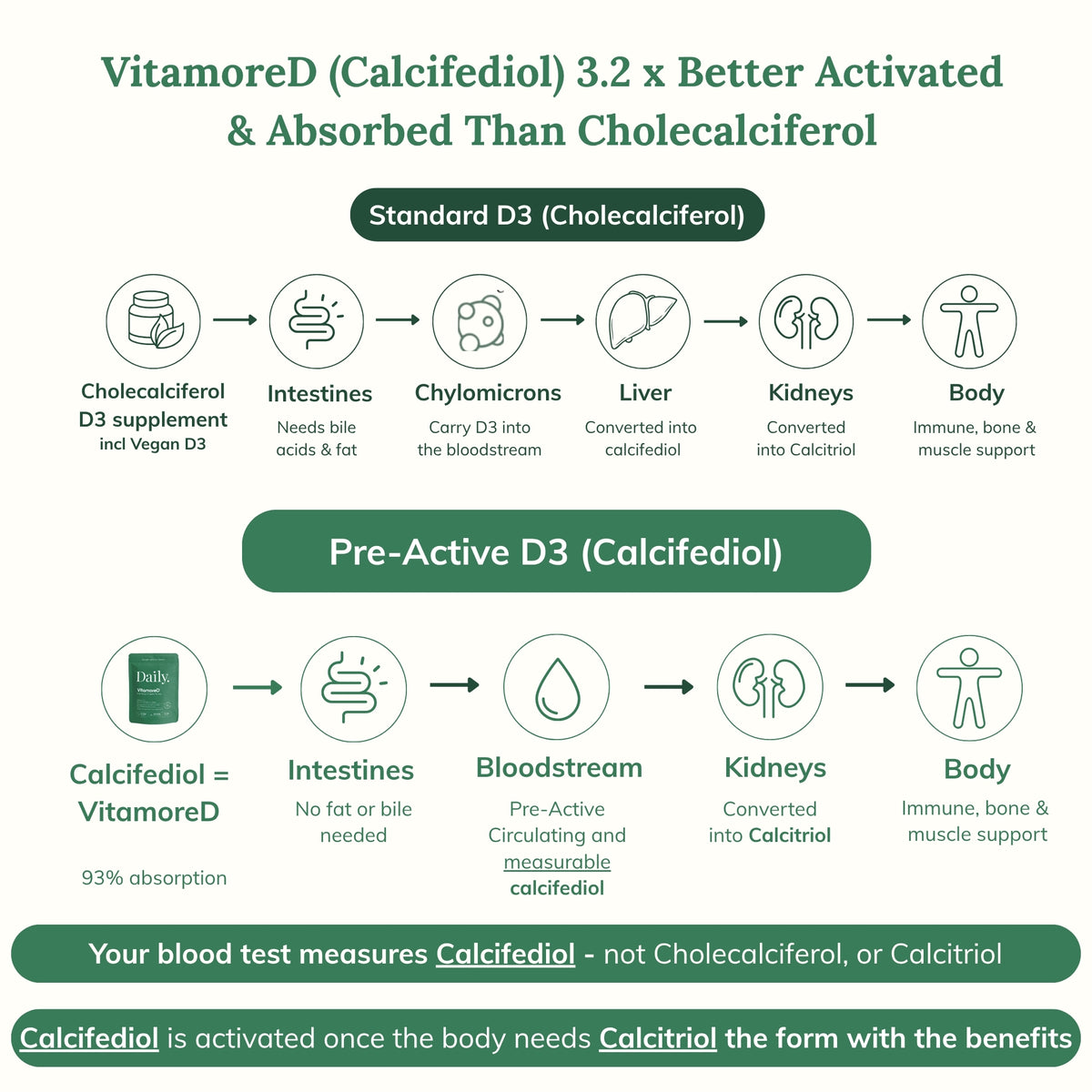
Vitamin D isn’t actually a vitamin; it’s a prohormone that goes through a two-step conversion process called hydroxylation before your body can actually use it and feel its benefits. All these studies on the benefits aren’t about cholecalciferol; they’re about calcitriol.
Calcifediol is the form of vitamin D that has already gone through that first step of hydroxylation. Calcifediol is also the exact molecule a blood test measures. Calcifediol is the step before activation, unlike cholecalciferol, which still requires two more steps: absorption and conversion in the liver (hydroxylation).
VitamoreD delivers Calcifediol in one easy-to-swallow tablet with rapid absorption and sustainable and measurable vitamin D levels.
The three-step process for vitamin D to convert and work
- Cholecalciferol (Vitamin D3): The form made by the skin when exposed to UVB sunlight rays, or the form taken as a traditional D3 supplement. This is the form of vitamin D also stored in body fat. Vitamin D as cholecalciferol is inactive and needs to be converted twice to become the form of Vitamin D (Calcitriol) that delivers the health benefits vitamin D research suggests.
- Calcifediol 25-(OH)D3: The circulating form of vitamin D3, the form screened and measured in your blood test by your GP and practitioner to show if you have too much or too little vitamin D. This is the form of D3 that practitioners refer to as your “vitamin D level” and is the form delivered by VitamoreD in an easy-to-swallow supplement. To become this form, cholecalciferol must first be converted by the CYP2R1 gene in the liver.
- Calcitriol 1,25(OH)2D3: The active hormonal form of vitamin D that is created when Calcifediol is converted in the kidneys. Calcifediol is the form of vitamin D that provides the benefits of vitamin D, i.e., mood, energy, bone and joint health, and immunity.
Calcifediol is measurable, targeted and increases vitamin D levels faster. The problem with traditional Cholecalciferol supplements is that they require fat, or adequate amounts of cholesterol, if you are trying to synthesise vitamin D from the sun. But it still needs to be converted by the CYP2R1 gene in the liver. This gene conversion in the liver can be reduced and even suppressed, especially in people who have chronically deficient vitamin D levels, are obese, are fasting and/or have type 1 or type 2 diabetes. This is why Calcifediol exists: it bypasses this step, doesn’t require liver conversion, is fat-soluble, and doesn’t care about your weight or any condition you are suffering from.
Ingredients
Ingredients
Per 1 easy-swallow VitamoreD tablet:
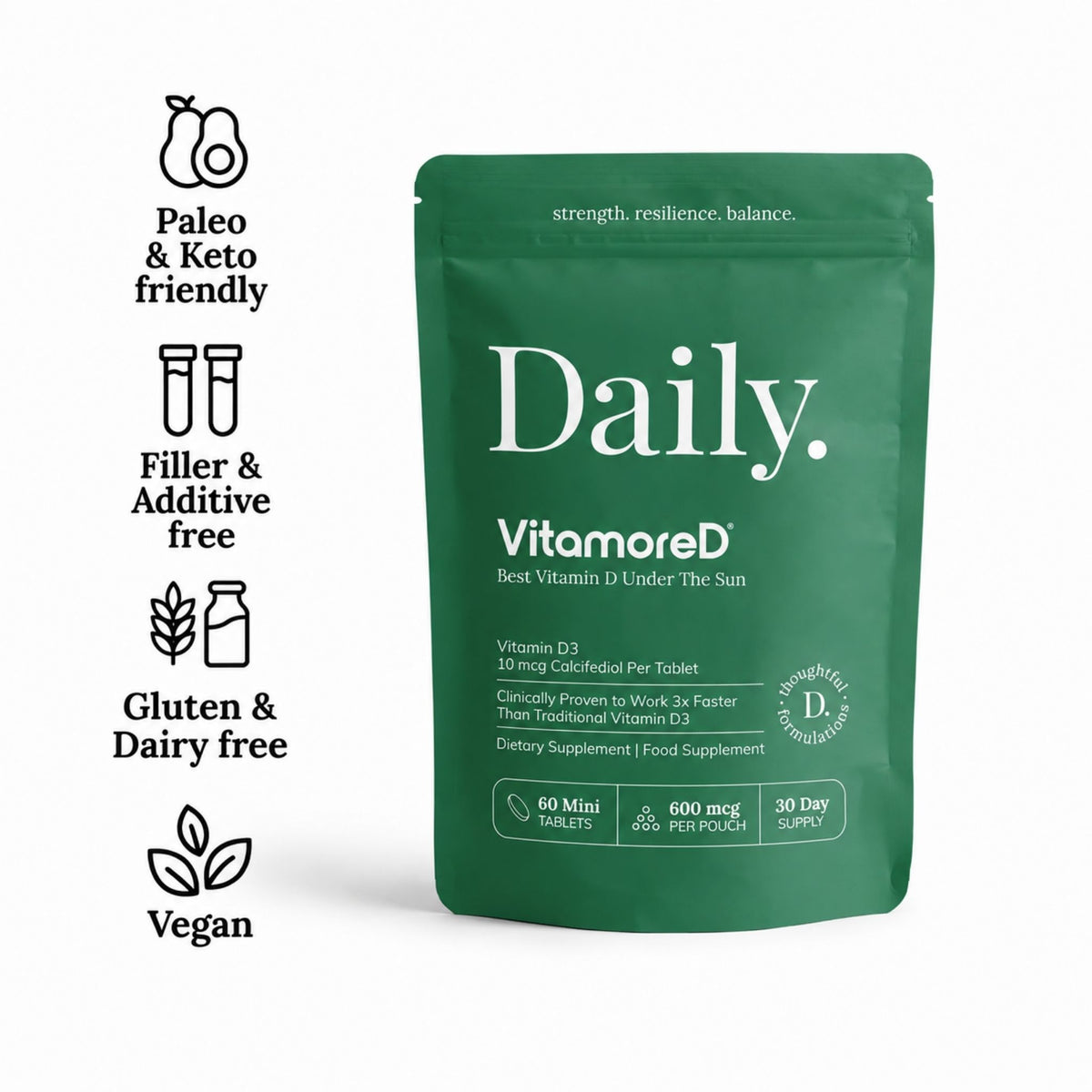
- 10 mcg (1000 I.U.) Dyna-Cal 25-OH Vitamin D3 (Calcifediol).
Natural Ingredients: Cellulose, Magnesium salt of fatty acids (sourced from sustainable palm oil).
Gut-Friendly Coating: Hydroxypropylmethyl Cellulose (HPMC) and Ethyl Citrate for stability, integrity and improved absorption.
Vitamin D Potency - I.U. of Calcifediol
Vitamin D Potency is defined in International Units (I.U.). Research shows that the form of Vitamin D in VitamoreD (Calcifediol, also known as Calcidiol or 25-hydroxy D3) can be 3.2 to 5x more potent than cholecalciferol because of how it works and activates in the body. In 2024, the EFSA re-evaluated Calcifediol and agreed on the following:
Cholecalciferol in International Units.
- 1 mcg (µg) of Cholecalciferol = 40 I.U.
- 10 mcg of Cholecalciferol = 400 I.U.
Calcifediol in International Units.
- 0.4 mcg (µg) of Calcifediol = 40 I.U.
- 10 mcg of Calcifediol = 1000 I.U.
Why Calcifediol was originally 2000 IU per 10 mcg tablet.
When we launched in 2023, you may have seen 10 µg of calcifediol described as 2,000 IU, including on earlier versions of this page and on our current VitamoreD supplement. That figure was not invented. EFSA's 2021 opinion used a conversion factor of 5, borrowed from its own animal-feed panel, as a theoretical calculation, and 10 µg x 5 = 50 µg, which equated to D3 as Calcifediol = 2000 IU. The Commission then asked for the factor to be derived properly from human data. EFSA ran the systematic reviews and, in 2023, replaced 5 with 2.5 for labelling purposes. The number was halved because the science improved, and we follow the current figure.
The Science
The Science
How Vitamin D is converted and activated
- Cholecalciferol (Vitamin D3): The form made by the skin when exposed to UVB sunlight rays, or the form taken as a traditional D3 supplement. This is the form of vitamin D also stored in body fat. Vitamin D as cholecalciferol is inactive and needs to be converted twice to become the form of Vitamin D (Calcitriol) that delivers the health benefits vitamin D research suggests.
- Calcifediol 25-(OH)D3: The circulating form of vitamin D3, the form screened and measured in your blood test by your GP and practitioner to show if you have too much or too little vitamin D. This is the form of D3 that practitioners refer to as your “vitamin D level” and is the form delivered by VitamoreD in an easy-to-swallow supplement. To become this form, cholecalciferol must first be converted by the CYP2R1 gene in the liver.
- Calcitriol 1,25(OH)2D3: The active hormonal form of vitamin D that is created when Calcifediol is converted in the kidneys. Calcifediol is the form of vitamin D that provides the benefits of vitamin D, i.e., mood, energy, bone and joint health, and immunity.
Scientific References
- Pérez-Castrillón JL, Dueñas-Laita A, Brandi ML, et al. Calcifediol is superior to cholecalciferol in improving vitamin D status in postmenopausal women: a randomized trial. J Bone Miner Res. 2021;36(10):1967–1978. PMID: 34101900 - https://pubmed.ncbi.nlm.nih.gov/34101900/
- Cashman KD, Seamans KM, Lucey AJ, et al. Relative effectiveness of oral 25-hydroxyvitamin D3 and vitamin D3 in raising wintertime serum 25-hydroxyvitamin D in older adults. Am J Clin Nutr. 2012;95(6):1350–1356. Am J Clin Nutr 2012;95(6):1350–1356. - https://www.sciencedirect.com/science/article/pii/S000291652302823X?via%3Dihub#cited-by
- Bischoff-Ferrari HA, Dawson-Hughes B, Stöcklin E, et al. Oral supplementation with 25(OH)D3 versus vitamin D3: effects on 25(OH)D levels, lower extremity function, blood pressure, and markers of innate immunity. J Bone Miner Res. 2012;27(1):160–169.. PMID: 22028071 - https://pubmed.ncbi.nlm.nih.gov/22028071/
- Graeff-Armas LA, Bendik I, Kunz I, Schoop R, Hull S, Beck M. Supplemental 25-hydroxycholecalciferol is more effective than cholecalciferol in raising serum 25-hydroxyvitamin D concentrations in older adults. J Nutr. 2020;150(1):73–81 PMID: 31518424 - https://pubmed.ncbi.nlm.nih.gov/31518424/
- Jetter A, Egli A, Dawson-Hughes B, et al. Pharmacokinetics of oral vitamin D3 and calcifediol. Bone. 2014;59:14–19 PMID: 24516879 - https://pubmed.ncbi.nlm.nih.gov/24516879/
- Vaes AMM, Tieland M, de Regt MF, Wittwer J, van Loon LJC, de Groot LCPGM. Dose-response effects of supplementation with calcifediol on serum 25-hydroxyvitamin D status and its metabolites: a randomized controlled trial in older adults. Clin Nutr. 2018;37(3):808–814. PMID: 28433267 - https://pubmed.ncbi.nlm.nih.gov/28433267/
- Shieh A, Ma C, Chun RF, et al. Effects of cholecalciferol vs calcifediol on total and free 25-hydroxyvitamin D and parathyroid hormone. PMID: 28187226 - https://pubmed.ncbi.nlm.nih.gov/28187226/
Written and reviewed by Tracey Raye, Nutritionist & Co-founder | MSc Personalised Nutrition.
Last reviewed 22nd October 2026. Next review: October 2026
How To Use
How To Use
Take 1 tablet daily, with or without food, in the morning.
Important information and recommendations:
- Take with or without food: Unlike traditional cholecalciferol, you do not need to take VitamoreD (Calcifediol) with food that contains fats.
- Take daily: Calcifediol has a half-life on average of 15 days (2 weeks); therefore, consistency matters.
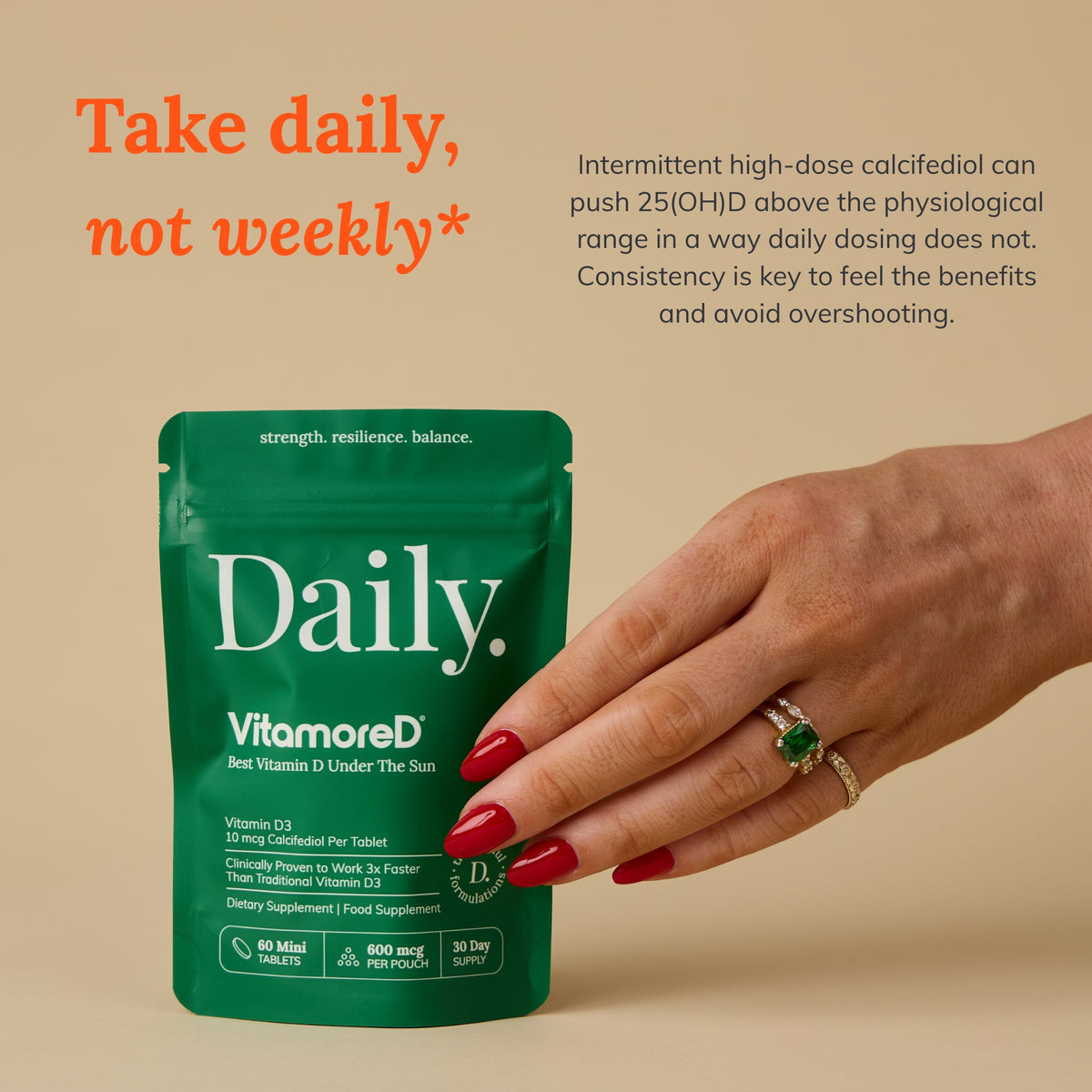
- Take daily, not weekly: Intermittent high-dose calcifediol can push 25(OH)D above the physiological range in a way daily dosing does not. Consistency is key to feel the benefits and avoid overshooting.
- Retest at 12 weeks: In research, Calcifediol 25(OH)D (25-Hydroxy-D3) increased vitamin D levels within a few days, not just weeks. So, if you tested low and began supplementing VitamoreD, it’s important to re-test to monitor levels and see how you are doing.
What to add to improve Vitamin D activation
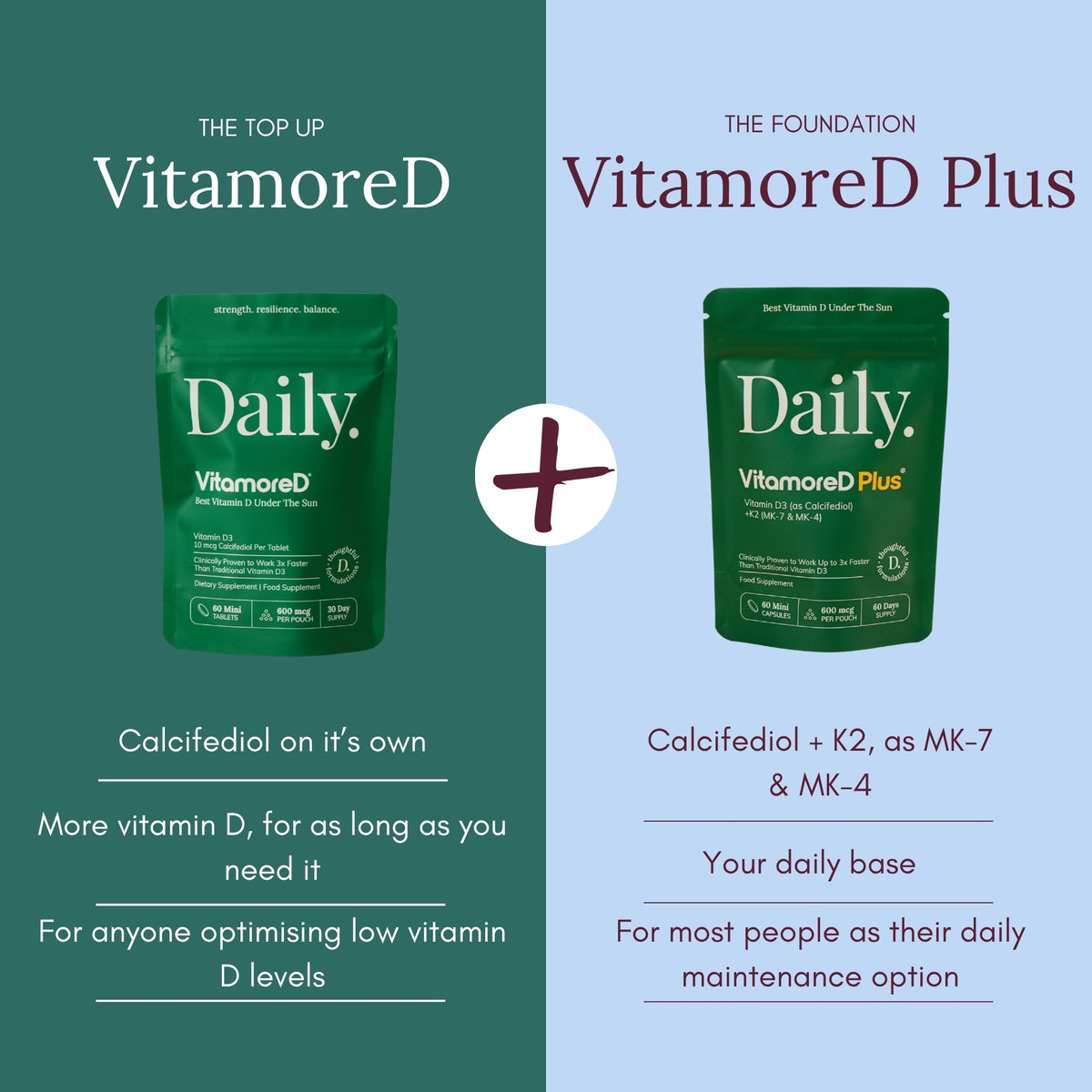
- Vitamin K2 as MK4 and MK7: Routinely taken with Vitamin D to support calcium-handling pathways (See VitamoreD plus)
- Daily 5 in 1 Magnesium: the hydroxylase enzyme in the kidneys relies on magnesium to help convert Calcifediol. If your magnesium intake is low, let’s be honest, most of us are! Then add the Daily 5 in 1 whole-body magnesium. 5 magnesium forms designed to restore magnesium levels, with B6 to activate absorption and conversion.
- Calcium: Vitamin D supports the absorption of calcium. If you have a low-calcium diet, then it’s important to work with your practitioner to adjust your diet or to find the right supplement for you.

Collapsible content
Is VitamoreD 3rd Party Tested?
Yes, please see a copy of our most recenmt 3rd party results showing Calcifediol was present in the tablets.
How do I take the VitamoreD™ tablets
Take two tablets with or without food daily.
Do I need to take, Magnesium or Boron with VitamoreD™?
You don't need to take these cofactors to support the processing of VitamoreD™. VitamoreD is the pre-active form of vitamin D, allowing the body to absorb and process this form of vitamin D quickly. This is because of the way the body needs to break down and process vitamin D.
Normal vitamin D supplements come in two forms:
- Vitamin D3: cholecalciferol / Calciferol. Extracted from the oil found in sheep's wool, called lanolin.
- Vitamin D2: ergocalciferol. Extracted from yeast, algae and funghi.
These two forms are the most commonly used.
However, they need to be processed for your body to utilise vitamin D. To do this, the vitamin D3 supplements must go through hydroxylation (this is just a fancy word for when our body adds hydrogen oxygen to the vitamin D). This process happens in the liver. This is where the vitamin D3 (cholecalciferol) or D2 (ergocalciferol) enters the liver and becomes the activated vitamin D Calcifediol (the active ingredient found in VitamoreD™). When your liver is converting the Cholecalciferol and Ergocalciferol to Calcifediol, it needs magnesium to help convert vitamin D. Without enough magnesium, this process can be slow, so even if you are increasing your intake of vitamin D3, your body will be slow to uptake and convert.
Boron, on the other hand, helps by boosting the half-life of Vitamin D and Magnesium. This means it extends the time these nutrients stay active in your body, allowing them to do their jobs longer.
Fortunately, because you are going to be supplementing with Calcifediol, it is the form before becoming Calcitriol, which is what our body uses to create the beneficial effects of vitamin D. As Calcifediol bypasses the step in the liver, it means your body not only rapidly utilises the vitamin D and keeps it consistent for longer.
However, if you are someone who is unable to maintain a balanced diet or has in the past had 'reactions' to vitamin D supplements, i.e. feeling irritable, muscle spasms, or anxious, then this could be a sign of magnesium deficiency.
We would therefore recommend supplementing a magnesium complex with B6 alongside your Vitamin D.
Here is one we recommend from our central website: Daily Magnesium Complex with B6
Why is Calcifediol better then Cholecalciferol?
Cholecalciferol, also known as Vitamin D3, is a form of Vitamin D that our bodies naturally produce when our skin is exposed to sunlight. It's also the version commonly found in many supplements and fortified foods.
Calcifediol is the compound your body converts Cholecalciferol into before it becomes the active form of Vitamin D (Calcitriol) that our bodies can use.
This conversion process from Cholecalciferol to Calcifediol in the liver can be slow and sometimes does not work for some people. This means your liver cannot convert even if you get plenty of vitamin D from the Sun or supplements.
By supplementing with Calcifediol, you can bypass this step and create a 'shortcut' to the active form of vitamin D, meaning you will get a rapid and consistent increase in vitamin D.
Where do you ship?
Globally! We ship from 3 different warehouses depending on where you are in the world:
UK & Worldwide: We ship from our HQ; Made By Daily Ltd, Unit 2 Fairfield Court, Wheler Road,
Coventry, CV3 4LJ.
EU: We ship from our warehouse in France; 7 rue du Meunier, 95700, Roissy-en-France
USA
We ship from our warehouse in Michigan; 6000 Pardee Rd., Taylor, MI 48180, USA
Is there research on Calcifediol?
Yes! Here is a list of papers:
- Quesada-Gomez JM, Bouillon R. Is calcifediol better than cholecalciferol for vitamin D supplementation? Osteoporos Int. 2018 Aug;29(8):1697-1711. doi: 10.1007/s00198-018-4520-y. Epub 2018 Apr 30. PMID: 29713796
- Shieh A, Ma C, Chun RF, Witzel S, Rafison B, Contreras HTM, Wittwer-Schegg J, Swinkels L, Huijs T, Hewison M, Adams JS. Effects of Cholecalciferol vs Calcifediol on Total and Free 25-Hydroxyvitamin D and Parathyroid Hormone. J Clin Endocrinol Metab. 2017 Apr 1;102(4):1133-1140. doi: 10.1210/jc.2016-3919. PMID: 28187226; PMCID: PMC5460735.
- Pérez-Castrillón JL, Dueñas-Laita A, Brandi ML, Jódar E, Del Pino-Montes J, Quesada-Gómez JM, Cereto Castro F, Gómez-Alonso C, Gallego López L, Olmos Martínez JM, Alhambra Expósito MR, Galarraga B, González-Macías J, Bouillon R, Hernández-Herrero G, Fernández-Hernando N, Arranz-Gutiérrez P, Chinchilla SP. Calcifediol is superior to cholecalciferol in improving vitamin D status in postmenopausal women: a randomized trial. J Bone Miner Res. 2021 Oct;36(10):1967-1978. doi: 10.1002/jbmr.4387. Epub 2021 Jun 24. PMID: 34101900; PMCID: PMC8597097.
- Loucera C, Peña-Chilet M, Esteban-Medina M, Muñoyerro-Muñiz D, Villegas R, Lopez-Miranda J, Rodriguez-Baño J, Túnez I, Bouillon R, Dopazo J, Quesada Gomez JM. Real world evidence of calcifediol or vitamin D prescription and mortality rate of COVID-19 in a retrospective cohort of hospitalized Andalusian patients. Sci Rep. 2021 Dec 3;11(1):23380. doi: 10.1038/s41598-021-02701-5. PMID: 34862422; PMCID: PMC8642445.
- Pérez-Castrillon JL, Usategui-Martín R, Pludowski P. Treatment of Vitamin D Deficiency with Calcifediol: Efficacy and Safety Profile and Predictability of Efficacy. Nutrients. 2022 May 5;14(9):1943. doi: 10.3390/nu14091943. PMID: 35565910; PMCID: PMC9102909.
Is VitamoreD™ Vegan?
Yes it is! VitamoreD™ is created from sunshine rich yeast. No additives, nasties or animal products are used in making of VitamoreD™
Is Calcifediol safe to take?
Vitamin D plays a crucial role in maintaining healthy bones, teeth, and supporting the immune system.
Calcifediol, also known as 25-hydroxyvitamin D, is a type of Vitamin D that can be obtained from dietary supplements. Did you know, our bodies naturally produce it when exposed to sunlight?
VitamoreD is simply a concentrated version of what our bodies produce. Meaning it is packed full of natural sunshine which is safely absorbed. This is why you only need a small amount as it is rapidly absorbed by the body.
VitamoreD is beneficial for people who live in areas with limited access to sunlight, those who need to avoid excessive sun exposure, or those with a Vitamin D-deficient diet.
Can I take Vitamin K2 with VitamoreD™?
Yes you can. K2 is recommended due to it's ability to prevent calcium from building up in the blood vessels.
Why is calcifediol better than cholecalciferol for vitamin D supplementation?
Oral calcifediol results in a more rapid increase in serum 25OHD compared to oral cholecalciferol. Secondly, oral calcifediol is more potent than cholecalciferol, so that lower dosages are needed.
Calcifediol has been hydroxylated, allowing it to bypass the liver conversion. What this means