


Vitamin D3, K2 & Magnesium Bundle
Vitamin D3, K2 & Magnesium Bundle
No se pudo cargar la disponibilidad de retiro
Share
Key Benefits
Key Benefits
Four essential nutrients. Two supplements. One simple daily routine.
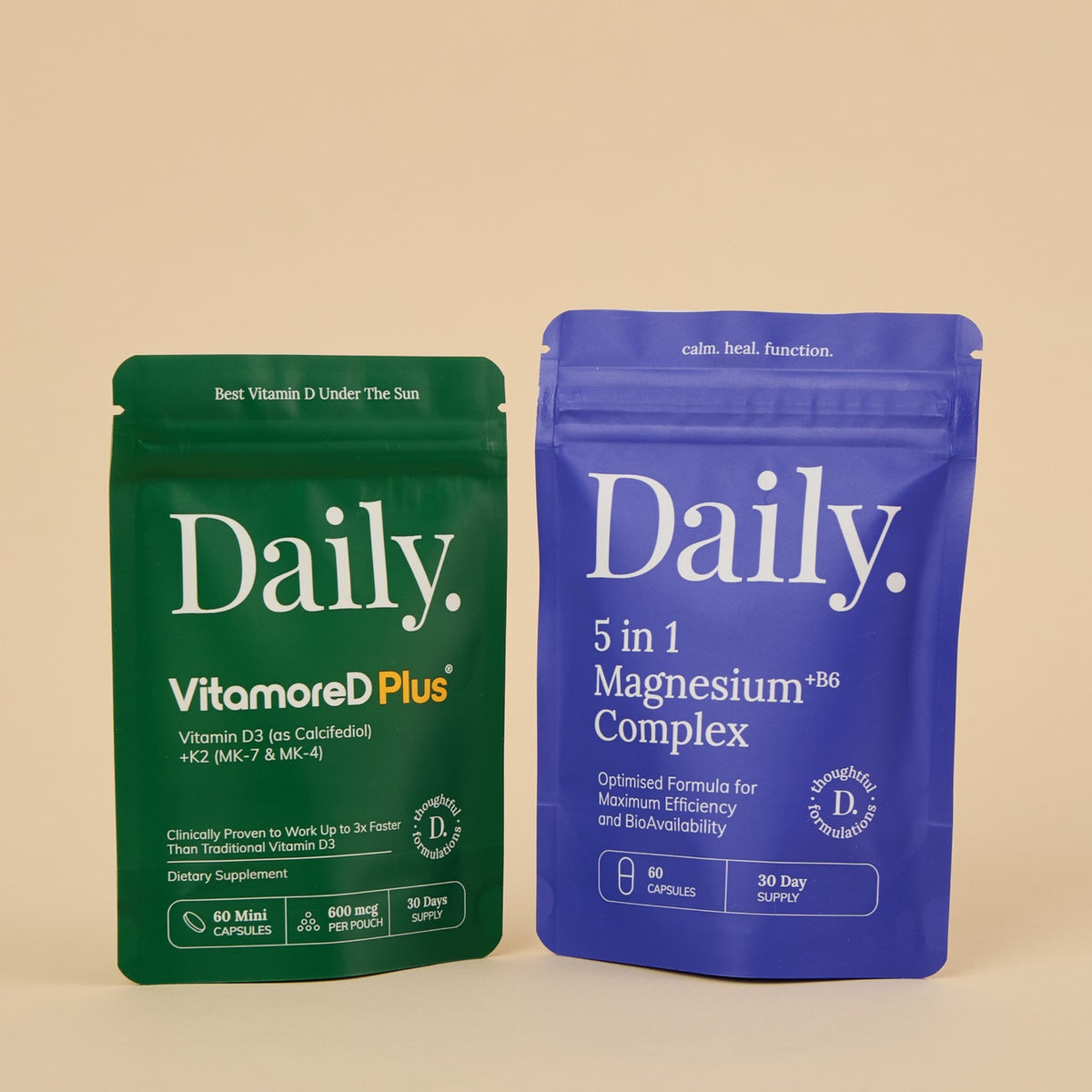
This bundle combines 10 µg of Vitamin D as calcifediol with 90 µg of K2 as MK-7 and 500 µg of K2 as MK-4, with five forms of magnesium and added B6. Vitamin D and magnesium play important roles in keeping your body functioning normally, and they're more connected than you might think.
Most people take vitamin D on its own and never think about magnesium. If your diet is low in magnesium, your body's ability to activate and use vitamin D may be less efficient. This bundle brings both nutrients together in one simple daily routine.
Vitamin D3, K2 and Magnesium
They work as a team; vitamin D cannot function without adequate magnesium. And your magnesium levels influence how well your body holds onto Vitamin D.
- Immune system support | Vitamin D + Vitamin B6
Vitamin D and B6 both contribute to the normal function of the immune system. - Strong bones and teeth | Vitamin D + Magnesium
Vitamin D contributes to the normal absorption and utilisation of calcium and phosphorus. Vitamin D and magnesium both contribute to the maintenance of normal bones and teeth. - Muscle function | Vitamin D + Magnesium
Vitamin D and magnesium both contribute to normal muscle function, helping support everyday movement and physical activity. - Energy and Fatigue | Magnesium + Vitamin B6
Magnesium and vitamin B6 contribute to normal energy-yielding metabolism and to the reduction of tiredness and fatigue. - Nervous system | Magnesium + Vitamin B6
Magnesium contributes to the normal functioning of the nervous system. Magnesium and vitamin B6 contribute to normal psychological function. - Normal blood clotting | Vitamin K2 (MK-4 & MK-7)
Vitamin K contributes to normal blood clotting.
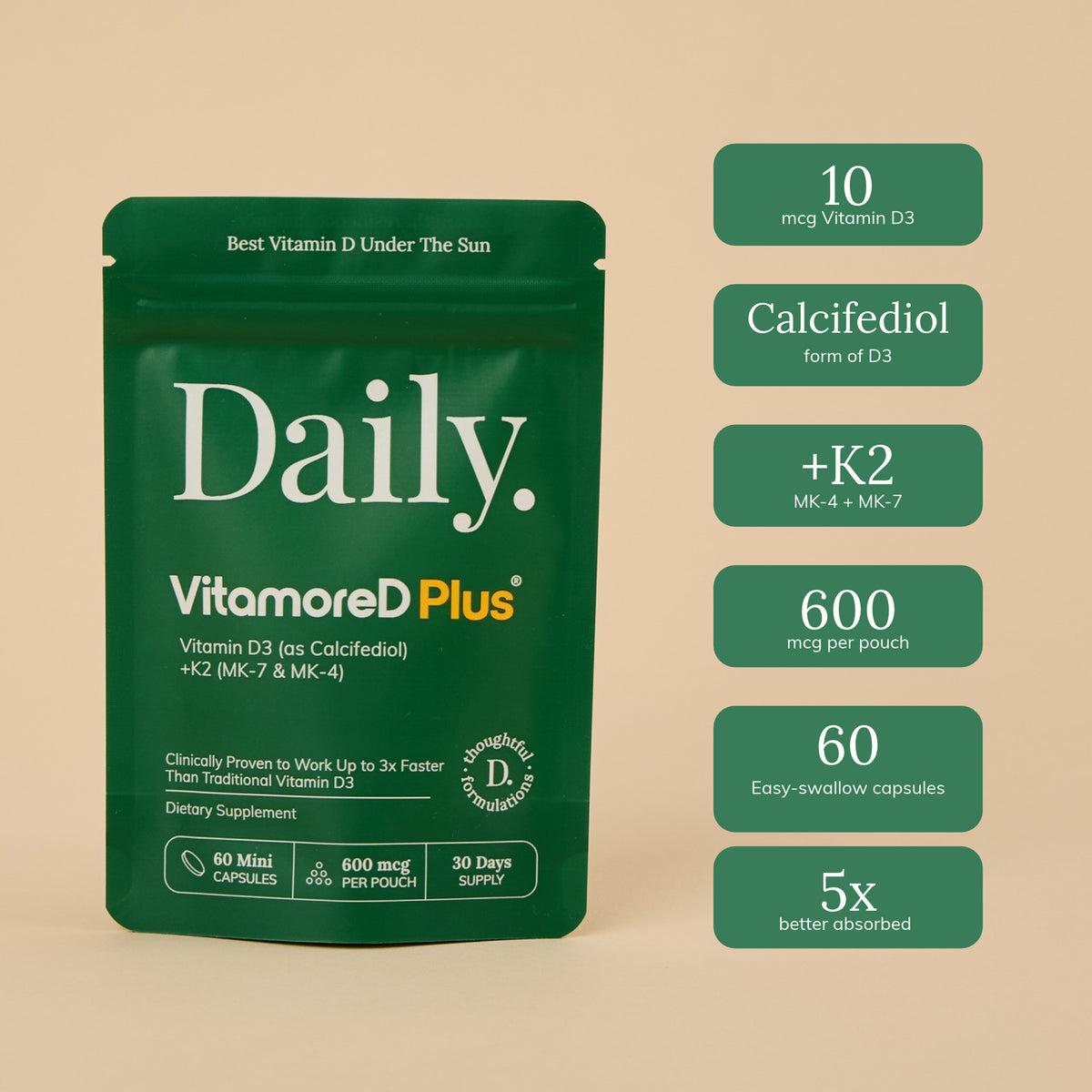
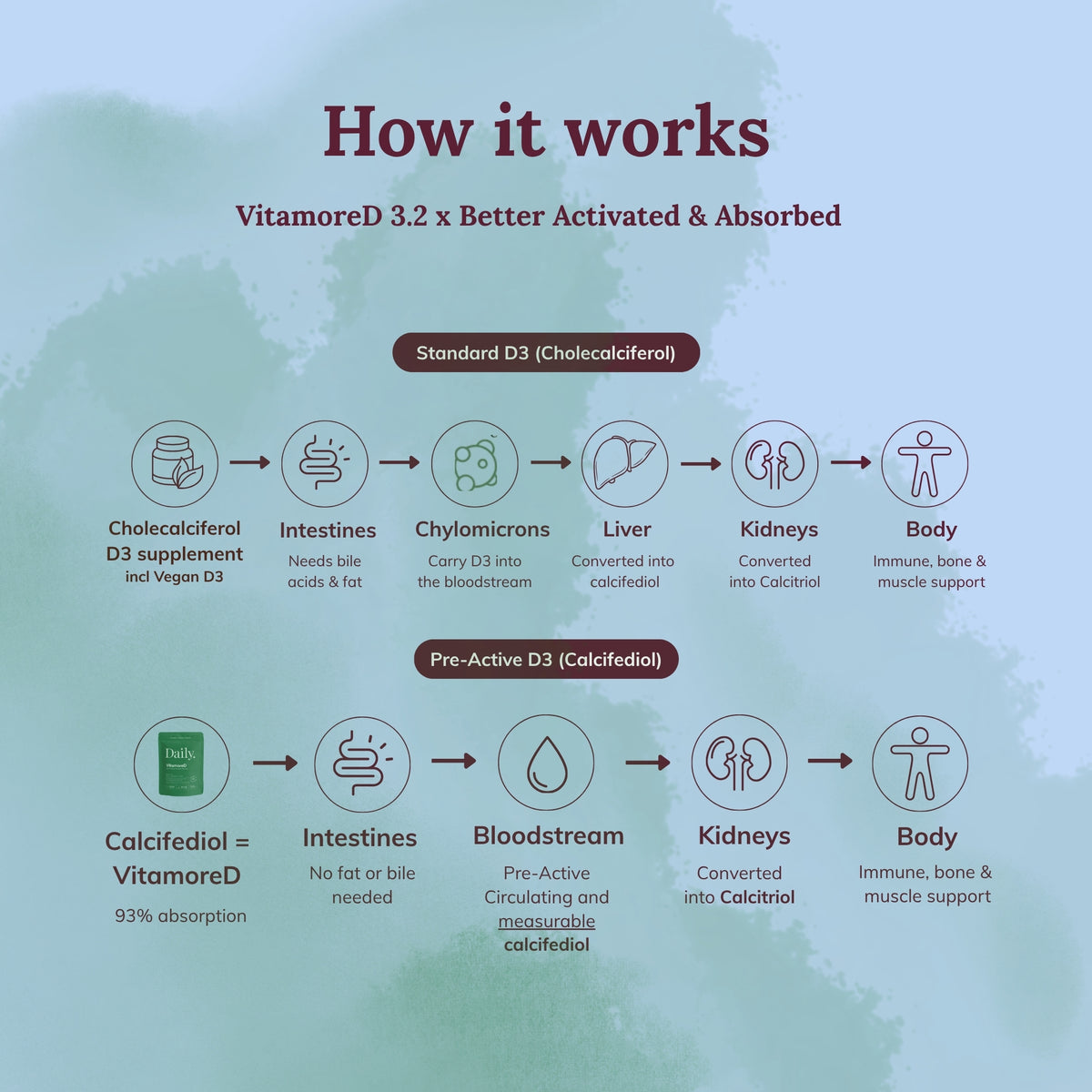
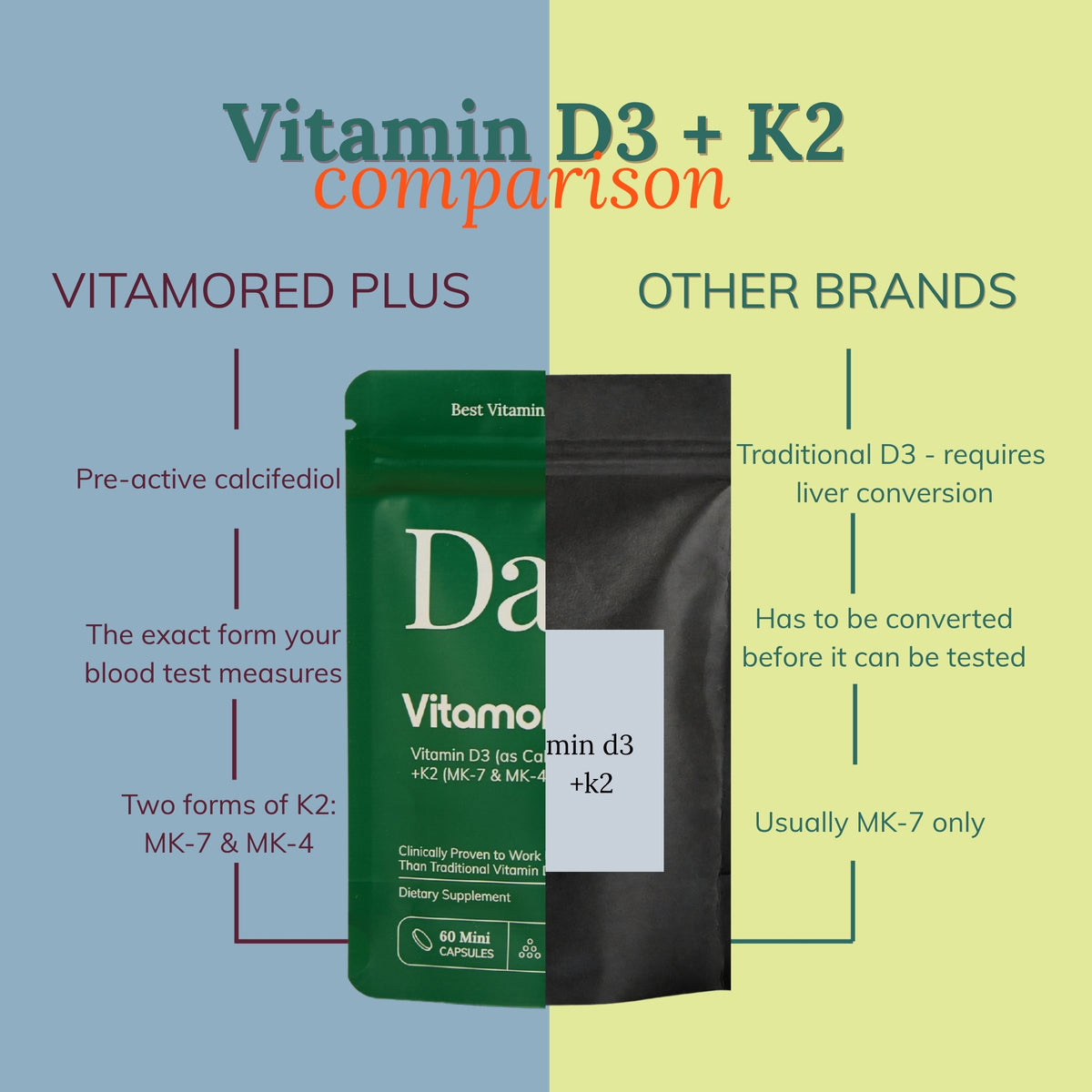
VitamoreD® contains calcifediol, the form produced after the liver's first vitamin D conversion step. Because it bypasses this stage, studies show it raises blood vitamin D levels faster and more predictably than standard vitamin D3 (cholecalciferol).
How It Works
How It Works
Why take magnesium with vitamin D?
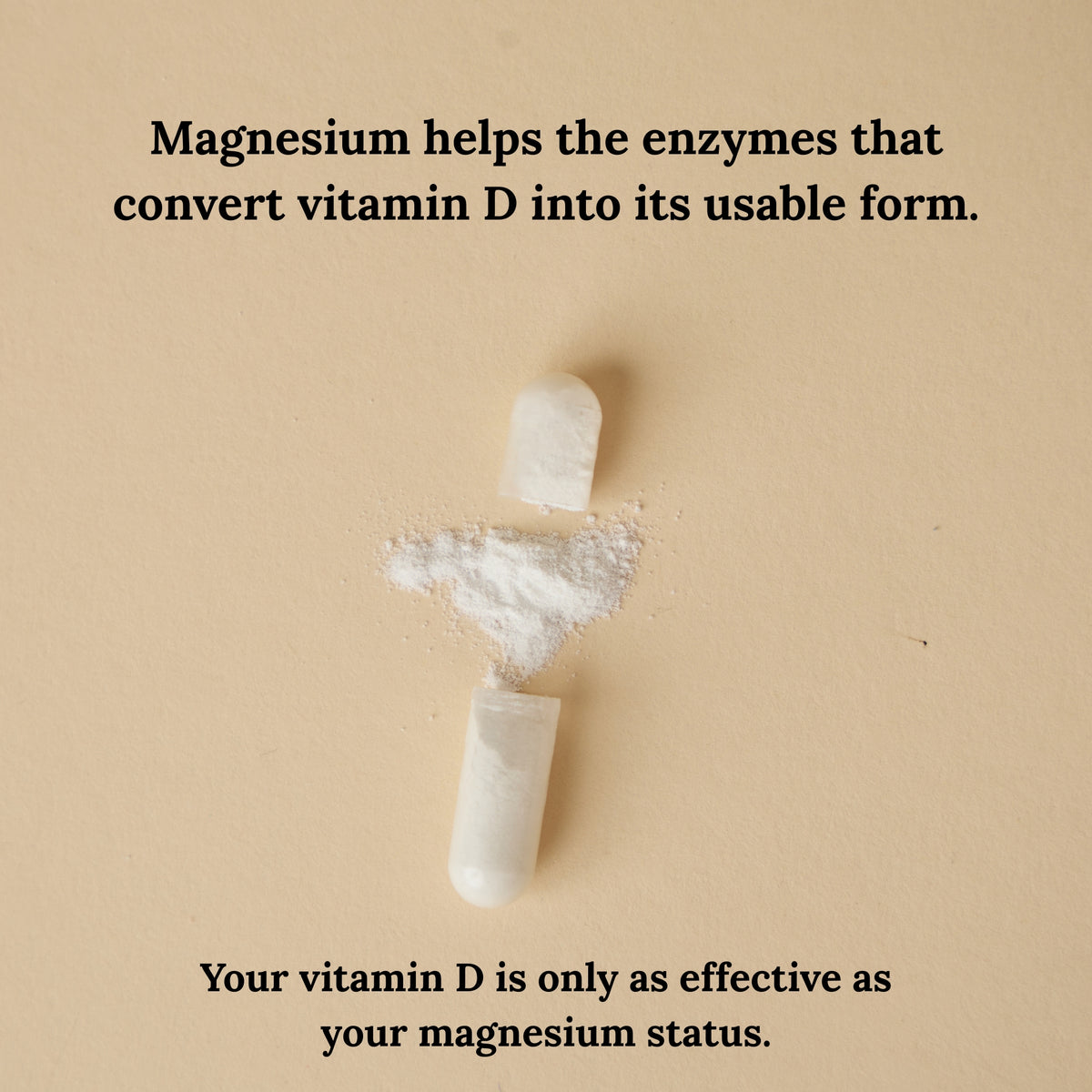
Traditional Vitamin D3, as cholecalciferol or calcifediol, doesn't convert into its hormonal form, calcitriol, as soon as you take it. Before the body can utilise vitamin D, it must be converted into active forms by the liver and kidneys. Magnesium acts as an essential cofactor in the enzymes involved in these conversion pathways and also supports vitamin D activity within cells. That's why magnesium and vitamin D are often recommended together.
Cholecalciferol Traditional Vitamin D3 → Liver + Magnesium → Calcifediol (VitamoreD, the form your blood test measures) → Kidneys + Magnesium → Calcitriol (Active Vitamin D).
- Magnesium supports the enzymes involved in both activation steps, helping the body utilise vitamin D effectively.
- Calcitriol is the active form of vitamin D that supports bone, muscle and immune health.
More than just vitamin D. Why there are five forms of magnesium in the Daily formula and what each form actually does.
Magnesium is the fourth most important mineral in the human body and is involved in over 300 biochemical reactions. For example, it supports nerve conduction, the process by which our nervous system transmits signals. We need magnesium, but not all magnesium compounds reach the same tissues. Each form of magnesium has a different absorption route and a different function. That's why one form of magnesium is never enough to replenish whole-body magnesium.
That’s why our nutritionist and founder, Tracey, formulated Daily Magnesium with more than just glycinate: in clinical practice, she saw that multiple forms of magnesium are needed to truly restore levels across the whole network, because different forms prioritise different areas.
Magnesium Glycinate: A form where magnesium is bound to the amino acid glycine, which our bodies naturally create; glycine has been shown to help regulate the nervous system and support serotonin production, which helps regulate mood, sleep, digestion, and learning.
Magnesium Citrate: A magnesium form bound to citric acid; because of citrate's high solubility, it can blend well with water, breaking down quickly, allowing it to deliver magnesium into the digestive tract, supporting not only rapid absorption of the magnesium but also helping to support regulation of digestion, especially for people who experience slow gut motility or who are prone to constipation. A go-to for people who are magnesium-deficient and need a fast boost in magnesium levels.
Magnesium Malate: Bound to malic acid, a key compound our body produces and the main acid in apples! Malic acid is a key component of our Krebs cycle. This is a key metabolic process which takes place in the mitochondria of your cells. This is where carbohydrates, proteins, and fats are broken down to generate adenosine triphosphate (ATP), the primary energy source fueling your body. This is why this key form of magnesium is used to move it deeper into the muscle and tissue, and also why it is one of the preferred forms used by athletes and people with chronic fatigue, as it provides sustained energy, reduces fatigue and supports muscle recovery.
Magnesium Marine: A game-changing natural magnesium, extracted from the Atlantic seawater of the Irish coast. This isn’t just normal magnesium; Aquamin (marine magnesium) contains 70+ trace minerals, which help it cross the intestinal epithelium and increase magnesium absorption. Read the research.
Magnesium Oxide: A high-strength magnesium source, with over 60% of the compound being elemental magnesium. This is one of the most misunderstood forms of magnesium because, when attached to oxygen, it can release magnesium more slowly, allowing it to deliver magnesium to the brain and support cognitive function and sustained replenishment. It has gained a bad reputation due to its high elemental magnesium content (60%) compared to glycine (13%), which has led to digestive discomfort and diarrhoea. That's why, in our formulation, we use the optimal amount to provide the benefits without the discomfort.
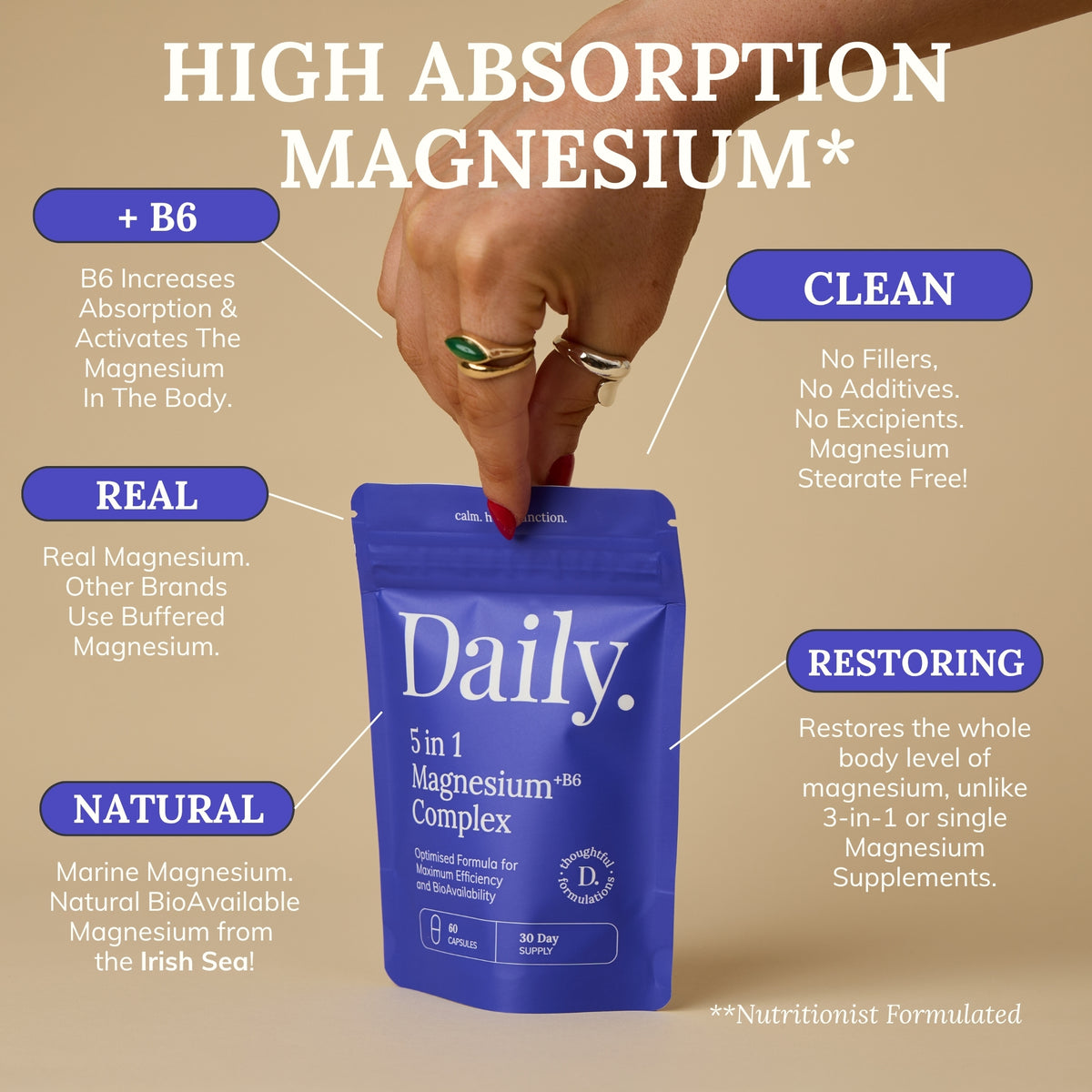
+ Vitamin B6: This methylated B vitamin was added to our formulation because B6 supports the cellular uptake of magnesium, enhancing magnesium's effectiveness within the cells. In one study, magnesium + B6 improved the production of Serotonin and GABA, which in turn improved participants' sleep, mood, and stress. Read the research.
Ingredients
Ingredients
60 capsules per pouch = 30 to 60 days' supply.
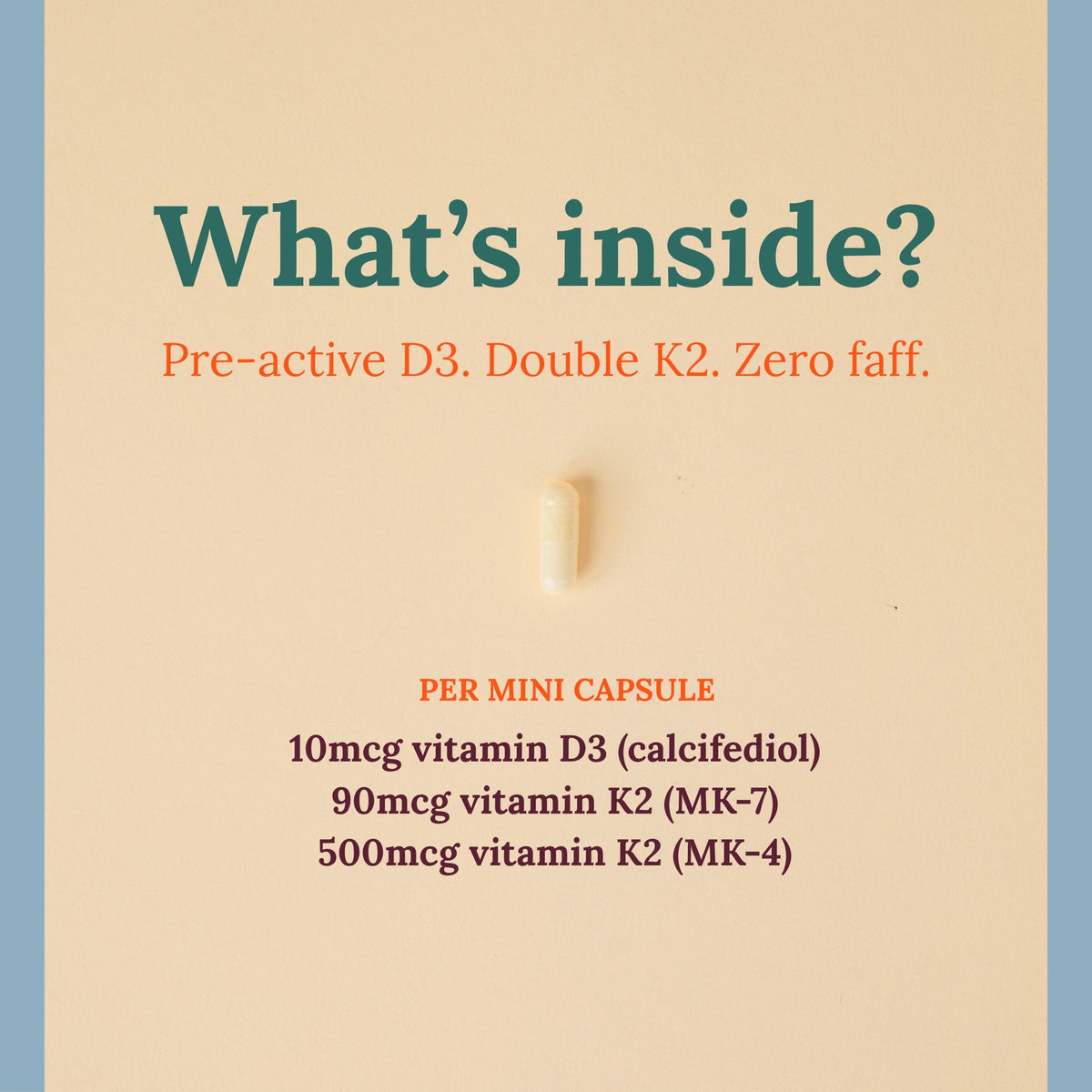
Per 1 easy-swallow VitamoreD Plus Capsule:
- 10 mcg (1000 I.U.) Dyna-Cal 25-OH Vitamin D3 (Calcifediol | 25-Hydroxyvitamin D3 | 25-OHD3).
- 90 mcg Vitamin K2 as Menaquinone-7 (MK-7)
- 500 mcg Vitamin K2 as Menaquinone-4 (MK-4)
Other Natural Ingredients: rice flour and bamboo silica. Capsule shell: hydroxypropyl methylcellulose (HPMC).
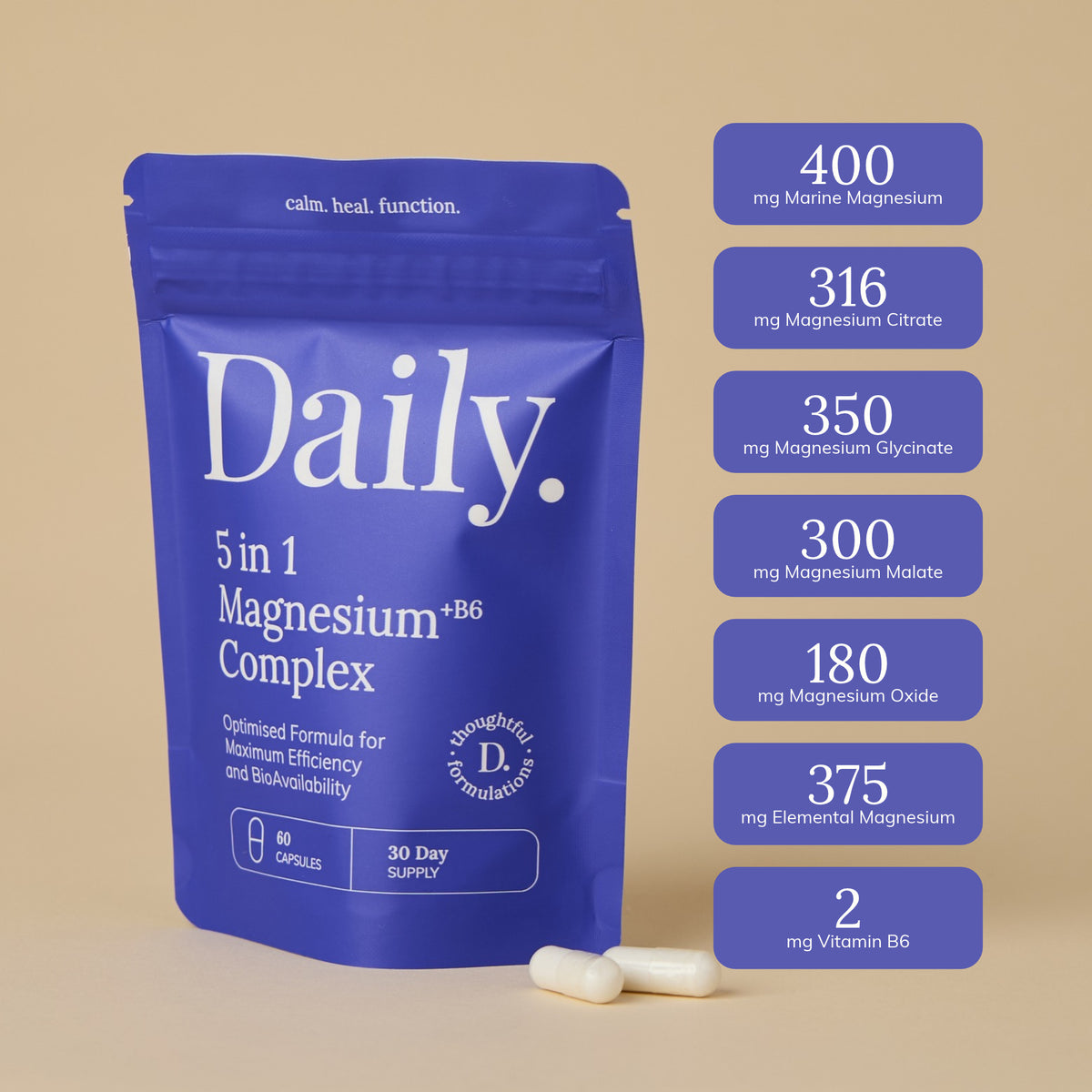
Multi-Source 5-in-1 Magnesium Complex (Per 2 Capsules)
- Aquamin® Marine Magnesium - 400mg
- Magnesium Citrate - 316mg
- Real Magnesium Glycinate - 350mg
- Magnesium Malate – 300mg
- Magnesium Oxide – 180mg
- Total Magnesium - 1546mg
- Total Elemental Magnesium: 375mg
- Vitamin B6 (Pyridoxal-5-Phosphate): 2mg
Read Our Label
Other ingredients: hydroxypropyl methylcellulose (capsule shell) and bamboo extract

Vitamin D Potency - IU of Calcifediol
Vitamin D Potency is defined in International Units (IU). Research has shown that the form of Vitamin D in VitamoreD (Calcifediol, also known as Calcidiol or 25-hydroxy D3) can be 3.2 to 5 x more potent than Cholecalciferol because of how it works and activates in the body. In 2024, the EFSA re-evaluated Calcifediol and agreed on the following:
Cholecalciferol in International Units.
- 1 mcg (µg) of Cholecalciferol = 40 IU.
- 10 mcg of Cholecalciferol = 400 I.U.
Calcifediol in International Units.
- 0.4 mcg (µg) of Calcifediol = 40 IU.
- 10 mcg of Calcifediol = 1000 I.U.
Why Calcifediol was originally 2000 IU per 10 mcg tablet.
When we launched in 2023, you may have seen 10 µg of Calcifediol described as 2,000 IU, including on earlier versions of this page and on our current VitamoreD supplement. This was because EFSA's 2021 opinion used a conversion factor of 5, borrowed from its own animal-feed panel, as a theoretical calculation, and 10 µg x 5 = 50 µg, which equated to D3 as Calcifediol = 2000 IU. The Commission then asked for the factor to be derived properly from human data. EFSA ran the systematic reviews and, in 2023, replaced 5 with 2.5 for labelling purposes. The number was halved because the science improved, and we follow the current figure.
The Science
The Science
Why take magnesium with vitamin D?
Magnesium helps your body activate and utilise vitamin D.
Vitamin D doesn't become fully active as soon as you take it. Before your body can use vitamin D, it must be converted by the liver and kidneys into active forms. Magnesium acts as an essential cofactor in the enzymes involved in this process and helps support vitamin D activity within cells. That's why magnesium and vitamin D are often taken together.
- Liver Conversion: The liver converts vitamin D into calcifediol (VitamoreD), 25-hydroxyvitamin D (25(OH)D), the storage form measured in routine blood tests. Magnesium helps support the enzymes involved in this process.
- Kidney Conversion: The kidneys convert 25(OH)D into 1,25-dihydroxyvitamin D, the active form of vitamin D. Magnesium helps support the enzymatic pathways involved in this conversion.
- Cellular Activity: Active vitamin D works by binding to vitamin D receptors inside cells. Magnesium helps support many of the cellular processes involved in vitamin D signalling and function.
Why Vitamin K2 as MK-7 and MK-4 with Vitamin D
Research suggests that MK-4 and MK-7 behave differently in the body. MK-7 circulates in the blood for much longer, while MK-4 is the form naturally produced within tissues.
Vitamin D helps the body absorb calcium, but vitamin K2 helps direct that calcium to where it belongs, such as bones and teeth. MK-7 remains in the bloodstream for much longer than MK-4, making it effective at lower daily doses and providing sustained activation of vitamin K-dependent proteins. MK-4, although rapidly cleared from the bloodstream, is the form produced naturally within tissues from vitamin K1. Including both forms provides the long-lasting circulation benefits of MK-7 while also supplying the tissue form of vitamin K2 found naturally in the body.
- MK-7 peaked in the blood about 4 hours after intake, had a very long half-life, and built up to 7 to 8 times higher levels with daily intake. It also carboxylated osteocalcin more completely than vitamin K1
- A dose-finding trial in healthy adults tested MK-7 from 10 to 360 mcg a day. It improved the activation of vitamin K-dependent proteins outside the liver, with no effect on blood clotting in healthy people.
- A three-year trial in postmenopausal women used 180 mcg of MK-7 a day.
- In a single-dose comparison, 420 mcg of MK-7 peaked at 6 hours and stayed detectable for 48 hours. The same amount of MK-4 wasn't detectable in the blood at any point.
- The body makes MK-4 inside its own tissues from vitamin K1, using an enzyme called UBIAD1.
The science behind our Daily 5-in-1 Magnesium with B6
Magnesium deficiency is common, and most supplements won’t fix it.
Modern farming, food processing, stress, alcohol, and certain medications all deplete magnesium faster than our modern diets can replenish. In UK soil, according to reports produced independently by Natural Resource Management, there is 40% less magnesium than 60 years ago.
Furthermore, a standard blood test doesn't reliably detect deficiency; only 1% of the body's magnesium is in the bloodstream, so serum levels can appear normal until deficiency is severe, as 99% of magnesium is stored in the bones, cells, and muscles.
Why different forms of magnesium matter
Each form of magnesium has a carrier; this is where magnesium is attached to another molecule. For example, in magnesium bisglycinate, the amino acid glycine carries the magnesium. In magnesium citrate, citric acid carries the magnesium. Because of the magnesium carrier, magnesium can be distributed to different areas of the body. For example, the amino acid glycine can distribute magnesium to the central nervous system, connective tissue, and skin.
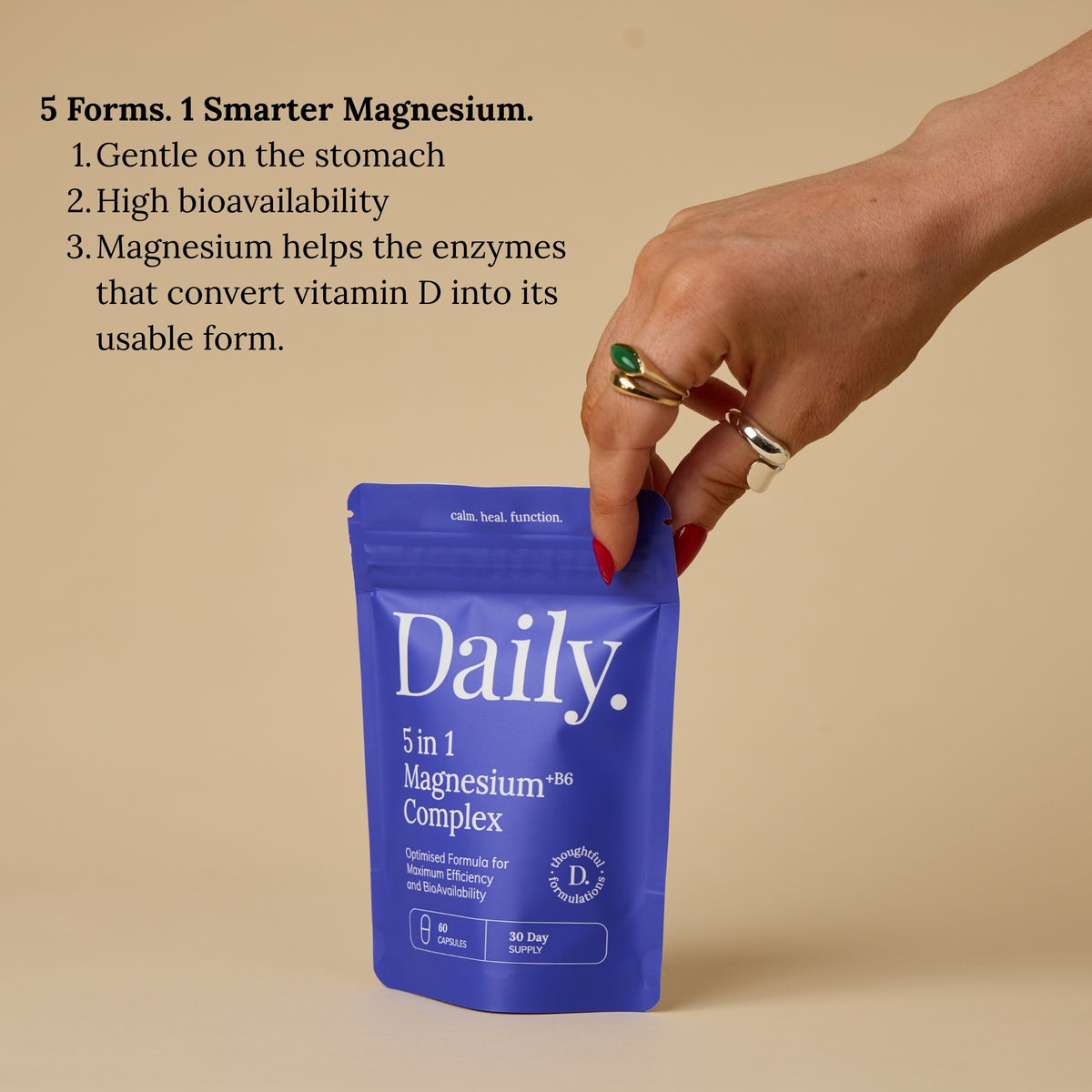
So, different forms of magnesium reach different tissues. One form of magnesium can not do the job of five, and without B6, magnesium’s activation is slower. This is why it’s important to be taking a multiform, 5-in-1 magnesium supplement.
Studies show that the body's absorption and use of magnesium depend largely on the type of magnesium. Magnesium glycinate is known to cross the blood-brain barrier via glycine transporters and is well tolerated, so it is often used in research on sleep and anxiety. Magnesium malate is taken up mainly by muscles and supports the Krebs cycle; research suggests it may reduce muscle fatigue and pain. Magnesium citrate dissolves well in the digestive tract and is used to support gut motility and overall magnesium absorption. Aquamin marine magnesium comes from Atlantic seawater and contains magnesium plus over 70 natural trace minerals, which help with absorption and activity in ways that synthetic salts cannot match. Magnesium oxide releases much more slowly than other forms of magnesium. The delayed release allows magnesium to travel further through the digestive tract, helping replenish magnesium levels throughout the body and, in studies, is a beneficial form for supporting brain function, especially in conditions such as migraine.
Why we use 5 forms of magnesium in our supplement
We chose not to make a daily magnesium supplement with only glycinate because that would mainly help with sleep and easing anxiety, but magnesium does much more. Using just magnesium glycinate would not support other important areas like energy, heart health, and muscle function, and it would miss out on marine minerals that help your body absorb magnesium. That’s why our daily 5-in-1 magnesium supplement combines several forms of magnesium in one capsule to restore your whole body's magnesium.
Why we add B6 to our magnesium supplement
When we designed our daily magnesium supplement, we focused not just on the magnesium form but also on what would help increase absorption and activation. The 2018 Pouteau et al. randomised clinical trial was the first study to directly compare magnesium alone versus magnesium combined with vitamin B6 (pyridoxine) in adults with stress and low serum magnesium. Research shows that vitamin B6 helps magnesium enter cells by acting as a cofactor. If there is not enough B6, less magnesium is absorbed by cells, and more is lost through the kidneys.
The results showed that the group taking both magnesium and B6 had about 24% greater stress reduction than the control group taking only magnesium, especially in people who were severely stressed. After 8 weeks, the combination group saw stress levels drop by nearly 50% from their starting point. A 2021 follow-up analysis of the same trial also found that the combination led to bigger improvements in anxiety, depression, and quality of life.
Why does this matter for our daily magnesium?
Most magnesium supplements do not include B6. Adding Vitamin B6 (pyridoxine), as we do in our magnesium, is supported by clinical trial evidence showing it improves outcomes by activating magnesium for stress, sleep, and mood, as shown in the study by Pouteau et al., especially for people who do not get enough B6 through diet alone. So, choosing a magnesium supplement without B6 means missing out on proven benefits.
How To Use
How To Use
How to use Daily VitamoreD Plus and 5-in-1 Magnesium Together
Morning: Take 1 VitamoreD tablet and 1 daily magnesium capsule with your morning meal.
Evening: Take 1 daily magnesium capsule with your evening meal.
How long to take:
Take 1 VitamoreD Plus Capsule (10 µg) and 2 magnesium capsules daily. Don't exceed this unless a healthcare professional has advised you to.
USA customers, please note: You can take 2 tablets (20 micrograms) of VitamoreD daily.
Important information:
- Don't double up on vitamin D: if you already take a multivitamin or another vitamin D product, check your total D3 intake with your
- Spacing from medication: keep magnesium about 2 hours away from tetracycline or quinolone antibiotics, thyroid medication and bisphosphonates, as magnesium can reduce their absorption.
- How long: take it daily from autumn to spring at a minimum, or all year if you get little sun.
- Track your vitamin D levels: we recommend tracking your vitamin D levels every 8 to 12 weeks to show you exactly what has changed and how your levels are progressing.
Speak with your healthcare professional if you are pregnant or breastfeeding, are under 18, have kidney disease, high blood calcium, sarcoidosis or another condition that affects calcium or vitamin D metabolism, or take thiazide diuretics, digoxin or other prescribed medication.
Store in a cool, dry place away from direct sunlight.



Contenido desplegable
Is VitamoreD 3rd Party Tested?
Yes, please see a copy of our most recenmt 3rd party results showing Calcifediol was present in the tablets.
How do I take the VitamoreD™ tablets
Take two tablets with or without food daily.
Do I need to take, Magnesium or Boron with VitamoreD™?
You don't need to take these cofactors to support the processing of VitamoreD™. VitamoreD is the pre-active form of vitamin D, allowing the body to absorb and process this form of vitamin D quickly. This is because of the way the body needs to break down and process vitamin D.
Normal vitamin D supplements come in two forms:
- Vitamin D3: cholecalciferol / Calciferol. Extracted from the oil found in sheep's wool, called lanolin.
- Vitamin D2: ergocalciferol. Extracted from yeast, algae and funghi.
These two forms are the most commonly used.
However, they need to be processed for your body to utilise vitamin D. To do this, the vitamin D3 supplements must go through hydroxylation (this is just a fancy word for when our body adds hydrogen oxygen to the vitamin D). This process happens in the liver. This is where the vitamin D3 (cholecalciferol) or D2 (ergocalciferol) enters the liver and becomes the activated vitamin D Calcifediol (the active ingredient found in VitamoreD™). When your liver is converting the Cholecalciferol and Ergocalciferol to Calcifediol, it needs magnesium to help convert vitamin D. Without enough magnesium, this process can be slow, so even if you are increasing your intake of vitamin D3, your body will be slow to uptake and convert.
Boron, on the other hand, helps by boosting the half-life of Vitamin D and Magnesium. This means it extends the time these nutrients stay active in your body, allowing them to do their jobs longer.
Fortunately, because you are going to be supplementing with Calcifediol, it is the form before becoming Calcitriol, which is what our body uses to create the beneficial effects of vitamin D. As Calcifediol bypasses the step in the liver, it means your body not only rapidly utilises the vitamin D and keeps it consistent for longer.
However, if you are someone who is unable to maintain a balanced diet or has in the past had 'reactions' to vitamin D supplements, i.e. feeling irritable, muscle spasms, or anxious, then this could be a sign of magnesium deficiency.
We would therefore recommend supplementing a magnesium complex with B6 alongside your Vitamin D.
Here is one we recommend from our central website: Daily Magnesium Complex with B6
Why is Calcifediol better then Cholecalciferol?
Cholecalciferol, also known as Vitamin D3, is a form of Vitamin D that our bodies naturally produce when our skin is exposed to sunlight. It's also the version commonly found in many supplements and fortified foods.
Calcifediol is the compound your body converts Cholecalciferol into before it becomes the active form of Vitamin D (Calcitriol) that our bodies can use.
This conversion process from Cholecalciferol to Calcifediol in the liver can be slow and sometimes does not work for some people. This means your liver cannot convert even if you get plenty of vitamin D from the Sun or supplements.
By supplementing with Calcifediol, you can bypass this step and create a 'shortcut' to the active form of vitamin D, meaning you will get a rapid and consistent increase in vitamin D.
Where do you ship?
Globally! We ship from 3 different warehouses depending on where you are in the world:
UK & Worldwide: We ship from our HQ; Made By Daily Ltd, Unit 2 Fairfield Court, Wheler Road,
Coventry, CV3 4LJ.
EU: We ship from our warehouse in France; 7 rue du Meunier, 95700, Roissy-en-France
USA
We ship from our warehouse in Michigan; 6000 Pardee Rd., Taylor, MI 48180, USA
Is there research on Calcifediol?
Yes! Here is a list of papers:
- Quesada-Gomez JM, Bouillon R. Is calcifediol better than cholecalciferol for vitamin D supplementation? Osteoporos Int. 2018 Aug;29(8):1697-1711. doi: 10.1007/s00198-018-4520-y. Epub 2018 Apr 30. PMID: 29713796
- Shieh A, Ma C, Chun RF, Witzel S, Rafison B, Contreras HTM, Wittwer-Schegg J, Swinkels L, Huijs T, Hewison M, Adams JS. Effects of Cholecalciferol vs Calcifediol on Total and Free 25-Hydroxyvitamin D and Parathyroid Hormone. J Clin Endocrinol Metab. 2017 Apr 1;102(4):1133-1140. doi: 10.1210/jc.2016-3919. PMID: 28187226; PMCID: PMC5460735.
- Pérez-Castrillón JL, Dueñas-Laita A, Brandi ML, Jódar E, Del Pino-Montes J, Quesada-Gómez JM, Cereto Castro F, Gómez-Alonso C, Gallego López L, Olmos Martínez JM, Alhambra Expósito MR, Galarraga B, González-Macías J, Bouillon R, Hernández-Herrero G, Fernández-Hernando N, Arranz-Gutiérrez P, Chinchilla SP. Calcifediol is superior to cholecalciferol in improving vitamin D status in postmenopausal women: a randomized trial. J Bone Miner Res. 2021 Oct;36(10):1967-1978. doi: 10.1002/jbmr.4387. Epub 2021 Jun 24. PMID: 34101900; PMCID: PMC8597097.
- Loucera C, Peña-Chilet M, Esteban-Medina M, Muñoyerro-Muñiz D, Villegas R, Lopez-Miranda J, Rodriguez-Baño J, Túnez I, Bouillon R, Dopazo J, Quesada Gomez JM. Real world evidence of calcifediol or vitamin D prescription and mortality rate of COVID-19 in a retrospective cohort of hospitalized Andalusian patients. Sci Rep. 2021 Dec 3;11(1):23380. doi: 10.1038/s41598-021-02701-5. PMID: 34862422; PMCID: PMC8642445.
- Pérez-Castrillon JL, Usategui-Martín R, Pludowski P. Treatment of Vitamin D Deficiency with Calcifediol: Efficacy and Safety Profile and Predictability of Efficacy. Nutrients. 2022 May 5;14(9):1943. doi: 10.3390/nu14091943. PMID: 35565910; PMCID: PMC9102909.
Is VitamoreD™ Vegan?
Yes it is! VitamoreD™ is created from sunshine rich yeast. No additives, nasties or animal products are used in making of VitamoreD™
Is Calcifediol safe to take?
Vitamin D plays a crucial role in maintaining healthy bones, teeth, and supporting the immune system.
Calcifediol, also known as 25-hydroxyvitamin D, is a type of Vitamin D that can be obtained from dietary supplements. Did you know, our bodies naturally produce it when exposed to sunlight?
VitamoreD is simply a concentrated version of what our bodies produce. Meaning it is packed full of natural sunshine which is safely absorbed. This is why you only need a small amount as it is rapidly absorbed by the body.
VitamoreD is beneficial for people who live in areas with limited access to sunlight, those who need to avoid excessive sun exposure, or those with a Vitamin D-deficient diet.
Can I take Vitamin K2 with VitamoreD™?
Yes you can. K2 is recommended due to it's ability to prevent calcium from building up in the blood vessels.
Why is calcifediol better than cholecalciferol for vitamin D supplementation?
Oral calcifediol results in a more rapid increase in serum 25OHD compared to oral cholecalciferol. Secondly, oral calcifediol is more potent than cholecalciferol, so that lower dosages are needed.
Calcifediol has been hydroxylated, allowing it to bypass the liver conversion. What this means